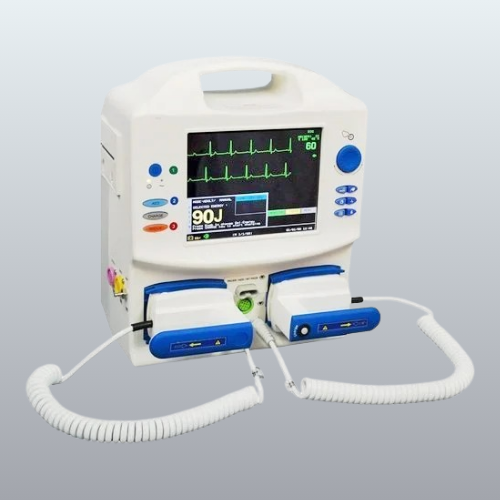
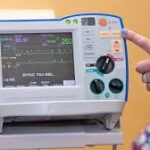
A defibrillator is a life-saving medical device that delivers an electrical shock to the heart to restore a normal rhythm during life-threatening arrhythmias like ventricular fibrillation or cardiac arrest. Used alongside CPR, it treats sudden cardiac arrest by stopping irregular heartbeats, allowing the heart’s natural pacemaker to reset. Automated External Defibrillators (AEDs) are designed for public use with voice prompts.
Simple: Analyzes and shocks if needed; safe for bystanders.
For Families: Automatic heart shock device for sudden cardiac arrest; voice-guided, safe for bystanders; includes pads/battery. For Doctors/Engineers: Biphasic waveform; auto-analysis; adult/pedi pads (expiry tracked); 3-5yr battery; lightweight 3kg; CPR feedback.
Oxygen concentrators, also called oxygen generators, are medical devices used in oxygen therapy. They help people who have lung conditions or trouble breathing by supplying the oxygen their bodies need to work properly.
Unlike oxygen tanks that must be refilled or replaced, an oxygen concentrator pulls in air from the surrounding environment and filters it to deliver oxygen that is about 90% to 95% pure. The oxygen is inhaled through a face mask or a nasal cannula, which is a small tube with two prongs that fit into the nostrils.
An oxygen concentrator should only be used if it is prescribed by a healthcare provider. Using oxygen when it isn’t needed can cause long-term damage to the lungs.
What is a defibrillator and when is it used?
A defibrillator gives a controlled electric shock to the heart to correct certain dangerous abnormal rhythms during sudden cardiac arrest.
It is used only when a person is unresponsive, not breathing normally and has no pulse, as part of emergency resuscitation.
What is the difference between an AED and a manual defibrillator?
An AED (Automated External Defibrillator) analyzes the heart rhythm by itself and tells the user whether a shock is needed, giving voice instructions step‑by‑step. A manual defibrillator is used by trained doctors or ALS providers, who select the energy and interpret the ECG rhythm before delivering a shock.
Can a non‑medical person use an AED?
Modern AEDs are designed so laypeople can safely use them, with voice and visual prompts to guide every step. The device will only allow a shock if it detects a shockable rhythm, so accidental shocking of a normal heart is extremely unlikely.
How does an AED work in simple language?
Two pads are stuck to the patient’s bare chest; the AED checks the heart rhythm and decides if a shock is required. If a shock is advised, it asks everyone to stand clear and then either gives the shock automatically or tells the user to press the shock button.
Is renting a defibrillator suitable for home use?
AED rental can be considered for high‑risk environments (clinics, diagnostic centers, offices, gyms, societies) where there is concern about sudden cardiac arrest. Manual hospital‑grade defibrillators are usually intended for medical facilities and ambulance use by trained professionals, not for unsupervised home use.
Is it safe to use a defibrillator around water or metal surfaces?
The chest should be quickly dried if wet, and pads should not be placed over water‑soaked skin or in standing water pools to reduce shock risk to rescuers. People must not touch the patient during shock; everyone should be asked to “stand clear” before pressing the shock button.